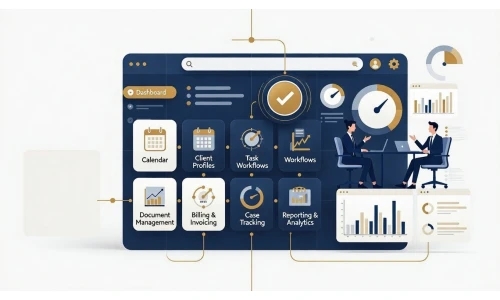
The criminal legal aid portal is a digital platform for criminal defence providers to interact with the Legal Aid Agency.
It replaces paper-based processes with online submissions, tracking, and communication.
Core Functions
Secure submission and management of legal aid applications and claims.
Accessed through the Legal Aid Agency’s online services with user authentication.
Submission of applications for representation and funding decisions.
Management of claims and payments linked to various fee schemes.
Guidance and Compliance
Legal Aid Agency provides instructions on data entry and evidence requirements.
Portal enhances transparency with time-stamped submissions and audit trails.
Good portal practice is linked to effective file management.
Communication and Training
Facilitates communication between providers and the Legal Aid Agency.
Requires regular monitoring and prompt responses to notifications.
Effective use depends on training and supervision for new users.
Future Developments
The portal will continue to evolve with enhancements based on policy and user feedback.
Providers must stay updated and adapt to changes.
Conclusion
The portal is essential for modern criminal defence work under legal aid.
It supports efficient administration and regulatory compliance.
Contact Information
For a free consultation, contact Lawsyst at 03333 051 345 or email info@lawsyst.co.uk.
Video Resources
Latest video resources released by the LAA are available on this subject.
The Criminal Legal Aid Portal: Digital Access, Applications and Compliance
An overview of the criminal legal aid portal, explaining how providers submit applications and claims, manage funding decisions and meet compliance requirements.
Posted On: 22 Jan 2026
Created By: Lawsyst LAA Desk
Table of Content
The criminal legal aid portal is a central digital platform through which criminal defence providers interact with the Legal Aid Agency in relation to publicly funded crime work. It forms part of the wider move towards digital administration within legal aid, replacing paper-based processes with online submissions, tracking and communication. For practitioners, an understanding of how the portal operates, and the guidance that surrounds its use, is now an essential part of criminal legal aid practice.
At its core, the criminal legal aid portal provides a secure environment for submitting and managing legal aid applications and claims. It is accessed through the Legal Aid Agency’s online services, with users authenticated via their individual credentials. This ensures that only authorised individuals, acting on behalf of contracted organisations, can view or submit information relating to criminal legal aid matters. The portal is therefore as much about security and accountability as it is about convenience.
One of the key functions of the criminal legal aid portal is the submission of applications for representation and related funding decisions. In the magistrates’ court, applications that require assessment under the interests of justice and means tests are managed through the portal. The system allows providers to input relevant information, upload supporting evidence and monitor the status of applications. This creates a clear digital record of decisions that can be referred to later, both for case management and audit purposes.
The portal also supports the management of claims and payments. Criminal legal aid operates under a range of fee schemes, including fixed and graduated fees, and the portal provides the mechanism for submitting these claims to the Legal Aid Agency. Accurate use of the portal is therefore directly linked to a firm’s cash flow. Errors in data entry, incorrect categorisation or late submission can result in delayed or reduced payment, underlining the importance of familiarity with the system.
Guidance plays a significant role in the use of the criminal legal aid portal. The Legal Aid Agency issues instructions on how information should be entered, what evidence must be uploaded and how different types of work should be reported. The portal does not replace the underlying rules; it implements them. Providers must therefore understand both the legal aid guidance and how that guidance is reflected in the portal’s structure and workflows.
From a compliance perspective, the portal enhances transparency. Information submitted through the system is time-stamped and attributable to individual users, creating an audit trail of activity. This supports the Legal Aid Agency’s oversight role and places a corresponding responsibility on providers to ensure that entries are accurate and complete. Good portal practice is closely linked to good file management, with digital submissions reflecting the evidence held on the physical or electronic file.
The criminal legal aid portal also facilitates communication between providers and the Legal Aid Agency. Notifications, requests for further information and decisions are issued through the system, reducing reliance on post or ad hoc correspondence. This can improve turnaround times, but it also requires providers to monitor the portal regularly and respond promptly to queries. Missed notifications can have practical consequences for both cases and funding.
As with any digital system, effective use of the portal depends on training and supervision. New users must be supported to understand not only how to navigate the system, but also the significance of the information they are submitting. Supervisors should ensure that portal use aligns with guidance and internal procedures, and that common errors are identified and addressed through learning rather than repetition.
The criminal legal aid portal continues to evolve. Enhancements and changes may be introduced to reflect policy developments, system improvements or user feedback. Providers are expected to adapt to these changes and to keep their knowledge current. A proactive approach to learning helps ensure that the portal remains a tool that supports, rather than hinders, effective practice.
In conclusion, the criminal legal aid portal is a key component of modern criminal defence work under legal aid. It provides a secure, structured and transparent means of managing applications, claims and communication with the Legal Aid Agency. When used in accordance with guidance and supported by sound supervision, it contributes to efficient administration, regulatory compliance and the sustainable delivery of publicly funded criminal defence services.
For those not already a Lawsyst client and ready to simplify your billing? Contact Lawsyst today for a free consultation. Call 03333 051 345 or email info@lawsyst.co.uk
We share some of the latest video resources relesed by the LAA (credit to the LAA) on this subject.
Frequently Asked Questions
What is the criminal legal aid portal?
The criminal legal aid portal is the Legal Aid Agency’s online system used by criminal defence providers to submit legal aid applications, manage funding decisions and submit claims for publicly funded crime work. It replaces many paper-based processes and provides a secure digital record of interactions with the Legal Aid Agency.
Who can access the criminal legal aid portal?
Access is limited to authorised users working for organisations that hold a criminal legal aid contract. Each user must have their own individual login credentials and appropriate permissions, ensuring that access to sensitive information is properly controlled and auditable.
What types of applications are submitted through the portal?
The portal is used to submit applications for criminal legal aid where assessment is required, such as magistrates’ court representation subject to the interests of justice and means tests. Supporting evidence can be uploaded and tracked within the system.
Can claims for payment be submitted through the portal?
Yes, the criminal legal aid portal supports the submission of claims under the relevant fee schemes. Accurate completion of claim information is essential, as errors or omissions can lead to delays, reductions or rejection of payment.
How does the portal support compliance and audit?
The portal creates a clear audit trail by recording who submitted information, what was submitted and when. This transparency supports compliance checks and audits by the Legal Aid Agency and places responsibility on providers to ensure accuracy and consistency with file evidence.
What happens if information entered into the portal is incorrect?
Incorrect information can result in adverse outcomes such as delayed decisions, rejected applications or reduced payment. Repeated errors may also attract increased scrutiny. Providers should correct mistakes promptly and review internal processes to prevent recurrence.
How are decisions and messages communicated through the portal?
Decisions, notifications and requests for further information are issued through the portal. Providers are expected to monitor the system regularly and respond within any specified timescales to avoid disruption to cases or funding.
What role does training play in using the criminal legal aid portal?
Training is essential to ensure that users understand both how to use the portal and the legal aid guidance that underpins it. Well-trained staff are less likely to make errors and more confident in managing applications and claims efficiently.
Does the criminal legal aid portal replace the need for proper file management?
No, the portal complements but does not replace file management. Information submitted through the portal must be supported by clear and accurate file evidence. Good digital practice and good file management go hand in hand.
How do providers keep up to date with changes to the portal?
Providers should regularly review Legal Aid Agency updates, guidance and communications relating to system changes. Sharing information internally and updating procedures helps ensure that portal use remains compliant and effective as the system evolves.
If there’s anything we haven’t covered here or you have any
specific questions about your account, just let us know and we’ll be happy to answer them. If
you’re not a customer yet but curious about our plans, contact
us